

Key Takeaways
- Independent research network findings show irrigated soybean systems in the US produce over 48% more yield than dryland systems, yet many farms still aren’t using the tools that would close that gap
- High upfront costs, patchy rural internet, and worries over sensor reliability keep plenty of soybean farmers from adopting smart irrigation
- Soil sensors, weather stations, and pivot controllers work best when combined, giving a fuller picture of what’s happening below and above the crop canopy
- EQIP cost-share at 75% of eligible costs can turn a marginal irrigation investment into one with a payback period of 4-8 years instead of 15-25 years
- Timing water to flowering and pod fill stages matters as much as the technology itself for protecting yield
Soybean fields fed by irrigation consistently outperform those left to rely on rainfall alone, yet a surprising number of soybean growers still haven’t adopted the tools that make irrigation precise rather than a guessing game. Closing that gap starts with understanding both the size of the opportunity and the reasons so many farms are missing out on it.
Irrigated Soybeans Outyield Dryland by 48%
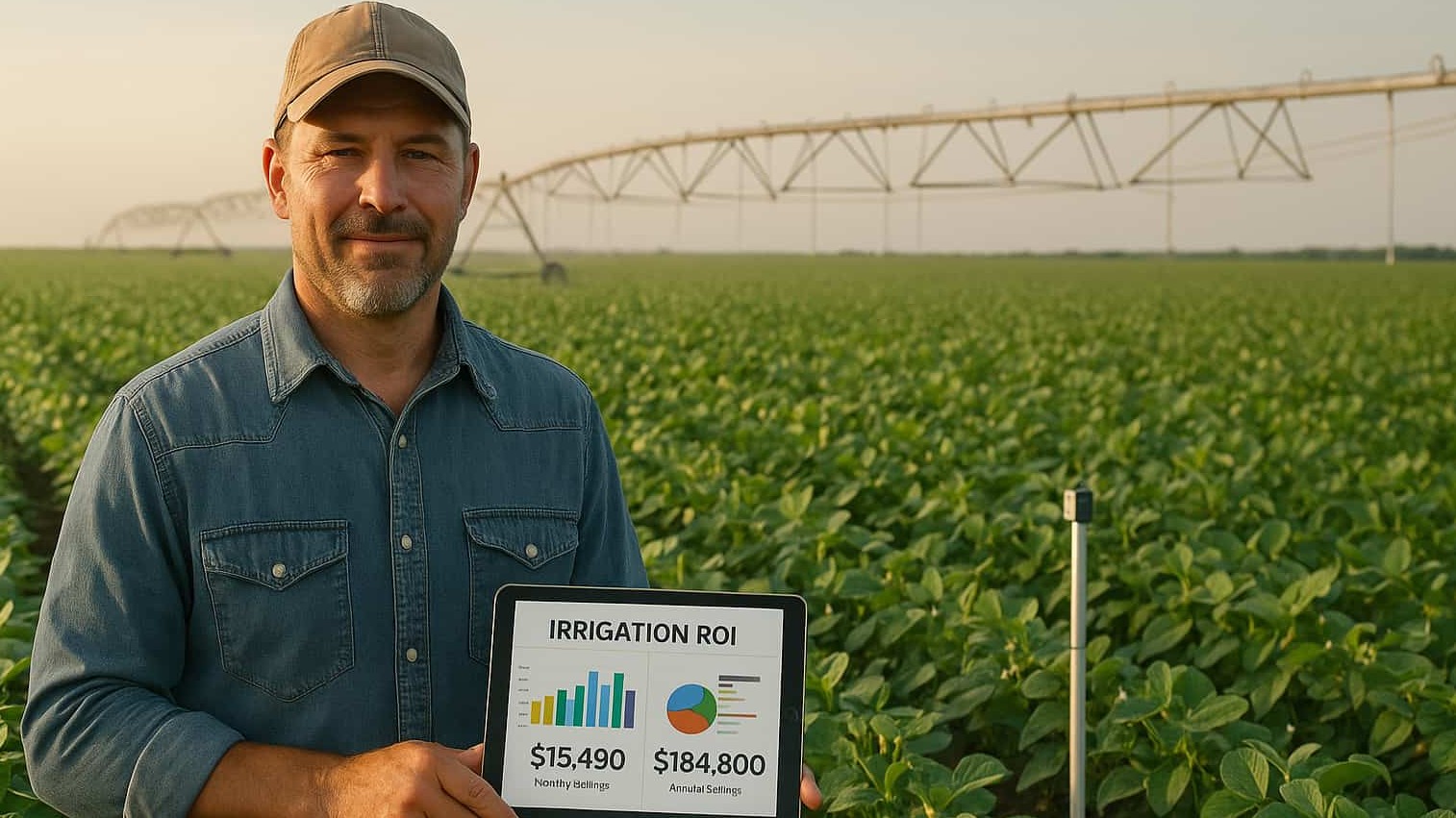
Independent research network findings show that irrigated soybean systems across the United States produce over 48% more yield than dryland systems. In parts of the North Central US, the same research network reports that irrigated fields have reached average yield potential of 85 bushels per acre, though even these fields carry a measurable yield gap against their true maximum potential. That gap represents lost bushels sitting on the table for farms that haven’t yet matched their irrigation approach to what the crop actually needs, season by season and field by field. For growers weighing whether an investment in irrigation technology makes financial sense, aguafox has laid out a working ROI model that walks through the real numbers behind a commercial soybean operation’s payback timeline.
The promise of smart irrigation is not simply about adding more water. It applies the right amount, at the right depth, at the right growth stage, so every drop counts toward yield instead of running off or sitting unused below the root zone.
Why So Many Farmers Still Miss Out
Despite the clear yield advantage, adoption of smart irrigation tools remains patchy. A government economic research review found that back in 2012, yield monitors and guidance systems were already common on soybean farms, with adoption running well ahead of soil sensors and automated controllers. Over a decade later, plenty of operations are still running irrigation on fixed calendar schedules rather than responding to real-time field conditions.
High Upfront Costs and Rural Connectivity Gaps
The biggest barrier is money paired with connectivity. Sensors, weather stations, and controllers all carry upfront costs, and many rural areas still lack the reliable internet needed to stream field data to a phone or laptop. Farm equipment dealers who work directly with growers report these two factors as the leading reasons farmers hold back, even when they understand the potential yield benefits.
Sensor Reliability and Data Overload Concerns
The second hurdle is trust in the technology itself. Soil moisture sensors can suffer from calibration drift and fouling in harsh field conditions, a problem irrigation equipment manufacturers have documented in their own product literature. Farm management researchers have also flagged the complexity of interpreting sensor data as a genuine deterrent for growers already juggling planting, spraying, and harvest logistics, who are understandably wary of adding a system that demands constant monitoring and a steep learning curve.
Tools That Close the Yield Gap
The good news is that today’s smart irrigation tools are built to reduce, not add to, that daily workload once set up properly.
Soil Sensors Reveal Root-Zone Reality
CropX soil sensors offer strong value for most soybean farmers thanks to straightforward do-it-yourself installation and a solid track record of reducing water use while protecting yield. CropX Vertex unit pricing from aguafox shows the unit with first-year platform subscription runs in the $375-400 range, with annual subscription fees applying after the first year. For operations wanting more granular detail, AquaSpy’s manufacturer specifications show its vertical sensor arrays measure conditions at 4-inch intervals down to 48 inches deep, giving a detailed view of exactly where roots are drawing moisture, which suits farms chasing maximum yield on high-value soybean acres.
Weather Stations Add Crop Intelligence
Arable’s own product documentation states that Mark 3 weather stations combine more than 40 climate and plant metrics in a single maintenance-free device. Rather than just tracking rainfall, these stations link weather patterns directly to crop health signals, giving farmers a clearer read on how much water the crop is actually using day to day.
Controllers Automate Pivot Decisions
Valley and Lindsay describe their ICON and FieldNET controllers as bringing remote access, weather integration, and AI-assisted recommendations to centre pivot management. Instead of driving out to check a pivot, farmers can adjust schedules from a smartphone, and the most capable soybean operations often pair soil sensors, a weather station, and one of these controllers together for a genuinely joined-up irrigation system.
Timing Water to Critical Growth Stages
Even the best equipment only pays off if water arrives when the crop needs it most.
Flowering Through Pod Fill Demands Precision
University extension and crop science research identifies the end of the reproductive period, when pod fill begins, as the most critical window for soil water availability in soybeans. Soil type shifts the timing too: field trials conducted in Tennessee found that starting irrigation at the R3 growth stage with around 1.5 inches per week maximised yield with less water on silt loam soil, while sandy soils needed irrigation started earlier, at R1, to reach the same result. Missing this window, or overwatering outside it, can cost meaningful bushels or invite disease pressure from excess moisture.
Weighing Costs Against Real Returns
Irrigation equipment suppliers report that smart irrigation systems can pay for themselves within a few years through water savings, reduced labour costs, and protected yield, though the exact timeline depends heavily on a farm’s water costs and starting practices. University research on soybean yield response shows average yield improvement from supplemental irrigation ranges from 5-12 bushels per acre on heavier clay soils to 15-25 bushels per acre on sandy loam soils, so the payoff varies considerably by field type.
How EQIP Cost-Share Reshapes Payback
The Environmental Quality Incentives Program changes the arithmetic substantially. Aguafox’s own ROI modelling shows that a typical commercial centre pivot installation with EQIP cost-share at 75% of eligible costs can reach simple payback in 4-8 years. Without that cost-share, the same modelling shows the same investment can stretch to 15-25 years to pay back from yield improvements alone, making EQIP access something to confirm early rather than an afterthought once the equipment is already ordered.
Smart Irrigation Is the Difference Between Guessing and Growing
The soybean yield gap is not a mystery. Fields with the right sensors, weather intelligence, and automated controllers consistently outperform those still relying on fixed schedules and guesswork. Closing that gap starts with an honest look at field conditions, drought risk, and available cost-share support before any equipment is purchased.
For a clear next step, working through a dedicated soybean irrigation ROI calculator can help turn field-specific numbers into a confident investment decision.
aguafox
Cres Digital Ltd
86-90 Paul Street
London
England
EC2A 4NE
United Kingdom
